
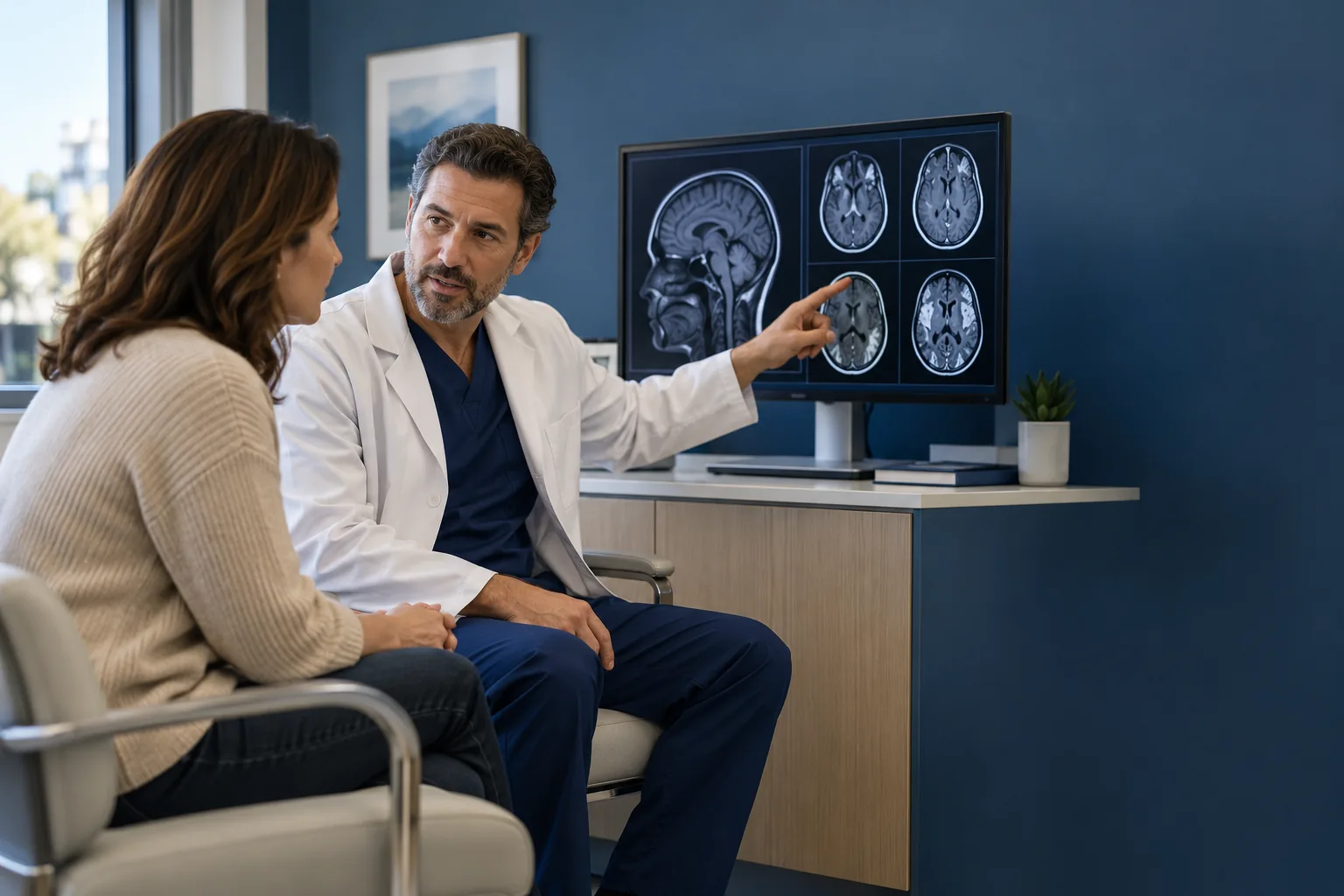
Neurosurgery In Turkey
Neurosurgery Is A Procedure That Requires Precision And Exceptional Care, Delivered By A Qualified Multidisciplinary Team Including Surgeons, Nurses And Other Specialists.
Why is brain surgery performed?
Neurological Surgery Is Performed To Treat Health Issues In This Area That May Occur Due To Congenital Abnormalities, Certain Diseases, Or Injuries.
Cerebral Hemorrhage
Cerebral Hemorrhage, Or Brain Hemorrhage, Is Bleeding That Occurs Between The Brain Tissue And The Skull Or Inside The Brain Tissue. Cerebral Hemorrhage Is A Serious Medical Condition That Threatens Life And Requires Immediate Medical Attention. Brain Bleeding Can Limit The Flow Of Oxygen To The Brain, Leading To Symptoms Such As Headaches, Nausea, Vomiting, Numbness In The Limbs, Or Facial Paralysis. Doctors Examine Two Main Areas Affected In The Brain When Determining The Type Of Brain Hemorrhage (Bleeding Inside The Skull And Outside The Brain Tissue, Bleeding Inside The Brain Tissue).
Cerebral Aneurysm
A Cerebral Aneurysm Occurs In A Blood Vessel In The Brain And Is Not Related To Aneurysms Elsewhere In The Body. A Cerebral Aneurysm May Appear As A Small Sac Filled With Blood Connected To The Blood Vessel By A Stem. This Condition Is Known As A Saccular Or Berry Aneurysm. Symptoms Of A Ruptured Cerebral Aneurysm Include Severe Headache, Neck Pain And Stiffness, Increased Drowsiness, Paralysis, Seizures, Slurred Speech, And Visual Problems, While An Unruptured Cerebral Aneurysm May Not Present Any Symptoms.
Abnormal Blood Vessels (Vascular Malformation)
Vascular Malformation Is An Abnormal Tangle Of Blood Vessels That Leads To Irregular Connections Between Arteries And Veins In A Part Of The Brain Or On The Brain's Surface. Normally, Arteries Carry Oxygen-Rich Blood Away From The Heart To The Body's Cells, Organs, And Tissues; Veins Return Blood With Less Oxygen To The Lungs. In Vascular Malformation, A Short-Cut Path Forms For Blood To Flow Directly From The Arteries To The Veins, Bypassing The Tissues, Leading To Tissue Damage And Death.
Skull Fracture
A Skull Fracture Is An Injury To The Bones Of The Skull. The Severity Of The Condition Varies Depending On The Extent Of The Fracture. Mild Fractures May Cause Few Problems And Heal Over Time, While Severe Fractures Can Lead To Serious Complications, Including Bleeding, Brain Damage, Cerebrospinal Fluid Leaks, Infection, And Seizures. There Are Four Types Of Skull Fractures (Linear Skull Fracture, Depressed Skull Fracture, Basilar Skull Fracture, And Penetrating Skull Fracture).

Parkinson's Disease
Parkinson's Disease Is A Disorder That Occurs In The Brain, Causing Uncontrolled Or Involuntary Movements, Such As Tremors, Stiffness, And Difficulty With Balance And Coordination. These Symptoms Usually Start Mildly And Worsen As The Disease Progresses. Parkinson's Patients May Experience Difficulty Walking, Speaking, And May Have Mental And Behavioral Changes, Sleep Problems, Depression, Memory Issues, And Fatigue.
Nerve Damage Or Irritation
Nerve Damage Is A Medical Condition That Affects The Nerves In The Brain, Spinal Cord, And Limbs, Or May Involve The Autonomic Nerves. In All These Cases, Nerve Damage Leads To A Wide Range Of Symptoms, Including (Inability To Feel Chest Pain, Excessive Sweating, Dizziness, Dry Eyes, Dry Mouth, Constipation, Bladder Dysfunction, Sexual Dysfunction, General Weakness, Muscle Atrophy, Tingling Sensation, Paralysis).
Epilepsy
Epilepsy Is A Chronic, Non-Contagious Disease That Affects The Brain. Epilepsy Is Characterized By Recurrent Seizures, Which Are Short Episodes Of Involuntary Movement That May Involve A Part Of The Body (Partial) Or The Entire Body (Generalized), Often Accompanied By Loss Of Consciousness And Loss Of Control Over Bowel Or Bladder Function.
Blood Clots In The Brain
A Blood Clot In The Brain Occurs When A Clot Blocks A Blood Vessel In Or Supplying The Brain, Preventing Enough Blood And Oxygen From Reaching The Affected Brain Tissue. This Can Cause An Ischaemic Stroke. It Can Cause Symptoms Such As Headaches And Seizures, And In Some Cases Permanent Disability Or Even Death. [NHS: diagnosis]
Brain Tumors
A Brain Tumor Is The Growth Of Cells In Or Near The Brain. There Are Several Different Types Of Primary Brain Tumors. Some Brain Tumors Are Non-Cancerous, Known As Benign Brain Tumors. Benign Brain Tumors May Grow Over Time And Put Pressure On Brain Tissue. Other Brain Tumors Are Brain Cancers, Also Known As Malignant Brain Tumors. Brain Cancers Can Grow Quickly. Cancer Cells Can Invade And Destroy Brain Tissue.
Fluid Accumulation In The Brain
It Is A Condition Where A Clear, Organic Fluid Surrounding The Brain And Spinal Cord (Excess Cerebrospinal Fluid) Accumulates Inside A Cavity Or Ventricles In The Brain. Fluid Accumulation In The Brain Can Lead To Harmful Pressure On The Brain Tissue Confined Within The Skull. Typically, Cerebrospinal Fluid Accumulation In The Brain Occurs Due To Increased Fluid Production, A Decreased Absorption Rate, Or A Condition That Prevents Its Normal Flow Through The Ventricular System.
Stroke
A Stroke Is The Interruption Of Blood Flow To Part Of The Brain, Also Known As A Brain Attack. There Are Two Main Types: Ischaemic (Caused By A Blocked Blood Vessel) And Haemorrhagic (Caused By Bleeding In Or Around The Brain). If The Brain Cannot Receive Blood And Oxygen, Brain Cells May Die, And The Functions Controlled By That Part Of The Brain May Be Lost. Symptoms Include Sudden Numbness Or Weakness In The Face, Arm, Or Leg, Especially On One Side Of The Body, Sudden Difficulty Speaking Or Understanding Speech, Sudden Difficulty Seeing In One Or Both Eyes, Sudden Difficulty Walking, Dizziness, Loss Of Balance And Coordination, And A Sudden Severe Headache With No Known Cause. If These Symptoms Appear Suddenly, Call An Ambulance Immediately Rather Than Waiting For A Routine Consultation; Rehabilitation Follows Emergency Treatment And Does Not Replace It. [NHS: diagnosis]

After Craniotomy Surgery
Upon Completing The Surgery, The Bone Flap Is Typically Secured In Place Using Plates, Sutures, Or Wires. The Hole May Be Left Open If There Are Tumors, Infections, Or Swelling In The Brain. When Left Open, The Procedure Is Known As A Craniectomy.
Risks Of Brain Surgery
All Surgeries Carry Some Risks. Brain Surgery Is A Major Medical Event And Carries Additional Risks.
Potential Risks Associated With Brain Surgery Include:
- Allergic Reaction To Anesthesia
- Brain Bleeding
- Blood Clot
- Brain Swelling
- Coma
- Weakness In Speech, Vision, Coordination, Or Balance
- Infection In The Brain Or At The Surgical Site
- Ticketing Issues
- Seizures
Preparing For Brain Surgery
The Specialist Doctor Overseeing The Patient's Treatment Will Provide All Instructions Regarding How To Prepare For The Surgery.
It Is Essential For The Patient To Inform The Treating Doctor About Any Medications They Are Taking, Including Supplements And Over-The-Counter Drugs. The Patient May Need To Stop Taking These Medications In The Days Leading Up To The Surgery. The Patient Should Also Inform The Treating Doctor About Any Previous Surgeries, Any Allergies To Specific Materials Or Medications, Or If The Patient Smokes Or Drinks Alcohol. The Patient May Be Given Special Soap To Wash Their Hair Before The Surgery.
Post-Operative Care After Brain Surgery
Immediately After The Surgery, The Patient Will Be Closely Monitored To Ensure Everything Is Functioning Properly. The Patient Will Be Positioned In An Elevated Position To Prevent Swelling In The Face And Brain.
Recovery From Brain Surgery Depends On The Type Of Procedure Performed, And The Typical Hospital Stay For Brain Surgery Can Last Up To A Week Or Longer. The Length Of The Patient’s Hospital Stay Will Depend On How Well The Body Responds To The Surgery, And The Patient Will Be Given Painkillers During This Time.
Before The Patient Leaves The Hospital, The Treating Doctor Will Explain The Steps To Follow After The Surgery. This Will Include How To Care For The Surgical Incision If Present.
Types of Neurosurgery
Neurosurgery For Vascular Disorders
Neurosurgery For Vascular Disorders Involves Treating Vascular Abnormalities In The Brain And Spinal Cord. Examples Of This Include Cerebral Aneurysms, Arteriovenous Malformations, And Spinal Arteriovenous Fistulas.
Functional Neurosurgery
Functional Neurosurgery Treats Chronic Neurological Disorders That Impair A Person's Function And Motor Abilities. It Includes Conditions Such As Parkinson's Disease, Tremor Disorder, Dystonia (A Condition Where Muscles Are Continuously Contracted), And Epilepsy.
Neurosurgery Of The Skull Base
Neurosurgery Of The Skull Base Is Performed To Remove Both Cancerous And Non-Cancerous Tumors, As Well As Deformities Found In The Lower Side Of The Brain, Or The Skull Base, Or The Few Upper Vertebrae Of The Spine.
Neurosurgery Of The Peripheral Nerves
Neurosurgery Of The Peripheral Nerves Is Used To Improve Nerve Function And Reduce Pain And Disability In People Suffering From Peripheral Nerve Disorders, Such As Acute Nerve Injuries, Entrapment Neuropathy, And Nerve Sheath Tumors.
Neurosurgery Of Tumors
Neurosurgery Of Tumors Is The Treatment For Patients Suffering From Benign And Malignant Tumors In The Brain, Skull, Skull Base, Spine, Spinal Cord, And Peripheral Nerves.
Neurotherapy With Interventional Radiology
Neurotherapy With Interventional Radiology Is A Minimally Invasive, Image-Guided Treatment Performed Through A Catheter Inside The Blood Vessels, Used For Selected Vascular Disorders Of The Brain, Spine And Neck.
Pediatric Neurosurgery
Pediatric Neurosurgery Treats Nervous System Problems And Deformities Of The Head And Spine In Children, Including Head Deformities, Spine Deformities, Brain Or Spinal Cord Injuries, And Birth Injuries.
Neurocritical Care
Neurocritical Care Is A Specialized Room Equipped With The Latest Medical Technologies, Falling Under The Neurology Department. It Is Used To Treat Patients With Critical And Sensitive Conditions Under The Supervision Of Specialists And Experts, Meeting Strict Standards That Suit The Severity Of Each Patient's Health Condition.
Spinal And Spinal Cord Surgery
Spinal And Spinal Cord Surgery Is Used To Treat Issues Such As Back Pain, Spinal Stenosis, Herniated Discs, Spinal Fractures, Tumors, Congenital Deformities, Scoliosis, And Degenerative Diseases.
Why Choose Tedavi For Neurosurgery?
Because At Tedavi, We Combine Medical Expertise With Advanced Technology To Ensure That Our Neurosurgery Is Safe And Of The Highest Quality Standards. We Rely On A Wide Network Of Exceptional Doctors And Surgeons In Turkey To Provide Treatment Planned Around Your Needs.
Contact Us For An Initial Assessment Of Your Condition, To Determine The Specialized Doctor, And To Provide You With All The Information You Need.
Frequently Asked Questions
What Conditions Can Be Treated Through Neurosurgery?
Neurosurgery Can Help If You Are Suffering From Any Of The Following Conditions In Or Around The Brain:
- Abnormal Blood Vessels
- Aneurysms
- Bleeding
- Blood Clots
- Damage To The Protective Tissue Called "Dura Mater"
- Abscesses
- Nerves
- Pressure After Head Injury
How Long Does The Recovery Process Typically Take After Neurosurgery?
Recovery From Neurosurgery Depends On The Type Of Procedure Performed, And The Typical Hospital Stay For Brain Surgery Can Last Up To A Week Or More. The Duration Of Your Hospital Stay Will Depend On How Your Body Responds To The Surgery, And You Will Be Given Painkillers During This Time.
Are There Non-Surgical Alternatives For Neurological Conditions?
Yes, In Some Cases, Specialized Medications, Physical Therapy, And Nerve Stimulation Techniques Can Aid In Recovery. The Specialist Doctor Remains The Most Qualified To Assess The Extent Of The Damage And Determine The Appropriate Treatment Method.
What Is The Difference Between Brain Surgery And Spinal Surgery?
Spinal Surgery Focuses On Spinal Cord Injuries, Spinal Cord Tumors, Or Herniated Discs.
Brain Surgery Focuses On Injuries That Occur In The Brain, Such As Brain Blood Vessel Blockages, Brain Bleeding, Or Brain Tumors.
How Experienced Is The Neurosurgery Team At Tedavi?
Tedavi Ensures To Partner With Experienced Doctors In Turkey To Help Ensure That Our Neurosurgery Is Safe And Of The Highest Quality Standards.
Are There Any Specific Preparations I Need To Make Before Neurosurgery?
Certainly, Your Doctor Will Provide Complete Instructions On How To Prepare For The Surgery. You Should Make Sure To Inform Your Doctor About All The Medications You Are Taking, Including Supplements And Over-The-Counter Drugs. You Should Also Inform Your Doctor About Any Previous Surgeries, Any Allergies To Specific Materials Or Medications, And Whether You Smoke Or Drink Alcohol. You May Be Given A Special Soap To Wash Your Hair Before The Surgery.
What Are The Potential Risks And Complications Associated With Neurosurgery Procedures?
- Memory Problems
What Is The Most Complex Type Of Neurosurgery?
All Neurosurgeries Are Challenging And Complex, But Surgeries Related To The Brain Are Often The Most Sensitive And Require Greater Precision.
Is Neurosurgery A High-Risk Surgical Procedure?
Certainly, Neurosurgery Is Considered A High-Risk Surgical Procedure, But Advances In Medical Science And The Skill Of Surgeons Have Made The Procedure Safer Than Before.
What Is The Success Rate Of Brain Surgery?
Outcomes And Risks Of Neurosurgery Vary With The Condition, The Procedure And The Patient’s General Health, And Success Cannot Be Promised; The Surgical Team Discusses The Expected Benefits And Risks With Each Patient.
Feel Free To Contact Us And Get More Information About Brain And Neurosurgery In Turkey At Tedavi.
You Can Now Get A Free Consultation And Learn All The Details That Matter To You About Your Health Condition.
Get A Consultation
Related topics
Request a free consultation
Request a consultation about Neurosurgery
Leave your name and number and a member of the TEDAVI team will call you to understand your needs. This is a contact request, not a diagnosis or an immediate doctor appointment.